4 Basketball Shooting Hacks That Make You Almost Never Miss
Most players spend hours shooting the basketball. Hours. And they still never fix the small details that are actually killing their percentages.
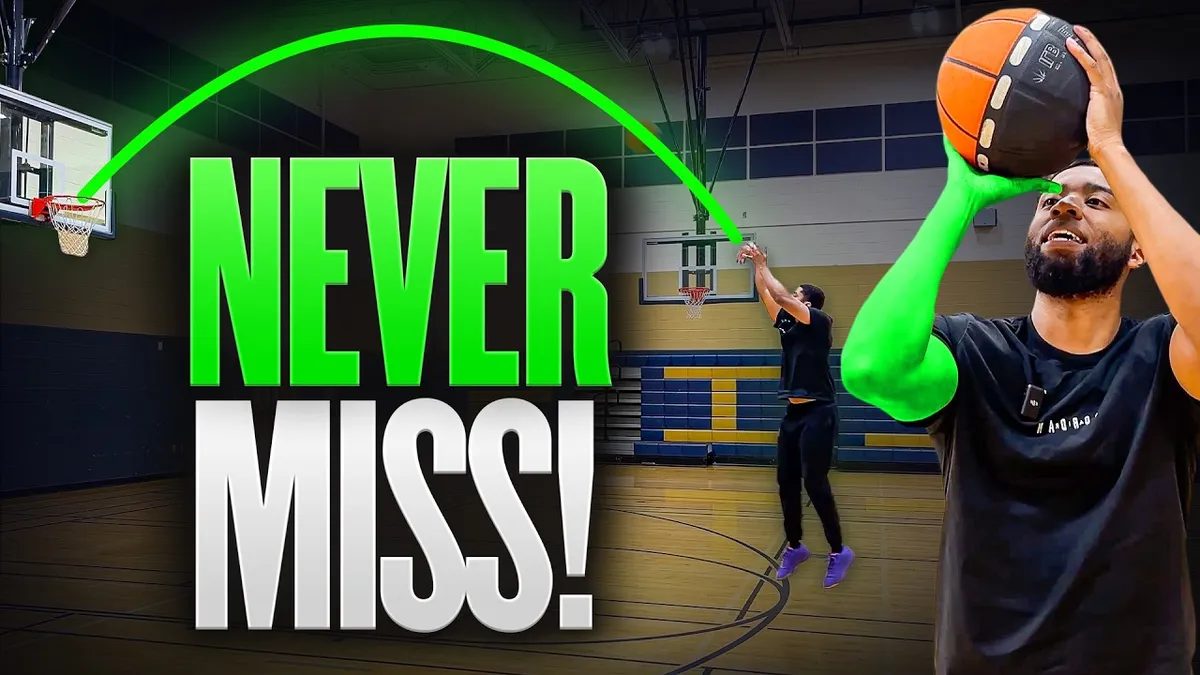
That's what this video from I Love Basketball TV goes after. Four overlooked shooting hacks. None of them are new drills or a whole new jumper. They're little things, like where your weight is when you catch it, or what your guide hand does at the very end. Small stuff. But the coach is pretty clear that small stuff is what decides whether it goes in.
Not sure shooting is even the thing to work on first? Find your training strategy with our free training quiz.
Hack 1: Stay on your toes before you get into your shot
Think about it this way. If you're completely flat-footed, you have to rock up to your toes first, and then jump. That's an extra step. If you're already nice and low and sitting on your toes right before you take off, you're ready to shoot a whole lot faster.
So that's benefit number one. Quicker release.
Number two is power. Say you're stepping into it, maybe you're getting into a side step. You can drive your feet into the floor and actually use the momentum you made when you stepped to the side. Then you lift and get into your shot.
Now, what do a lot of people get wrong? They go flat-footed. They land, both feet hit the floor nice and hard, and everything stops. From there they have to try to recreate that energy. That's a big pause, and it throws you off.
You want the opposite. Get your feet to the floor as fast as you can, then get up into your shot as fast as you can.
One catch: going forward is different
This part matters. If you're moving forward, like coming off the dribble into a stop, your first step is going to be heel first. The heel hits, then you get to your toe on the second step and go up.
So you're not always on your toes when you're going forward. Side step? Land on your toes and get off into it. Coming around on a curl and landing two feet at the same time? You'll probably land heel first, then take that little hop, and that's when you land on your toes and shoot.
Really understand the difference between going forward and moving sideways or backwards. That's the hack.
Hack 2: Let your guide hand extend out slightly
Your guide hand has one job. Keep the ball balanced.
When you get low and get to your set point, and then go to release it, letting that hand go with the ball just a little bit longer gives you better balance on the release. Better balance, better result. Pretty simple.
The coach uses a fadeaway as the example. You drive, you stop, you fade. You're falling away, so that shot needs a whole lot more balance just to be a good shot. If your guide hand comes off too early or stays too low, you're making a tough shot even tougher.
Where it goes wrong
A lot of players leave the guide hand low. They get to the set point, keep that hand down, and then extend only the shooting hand. Now the ball has more time to wiggle out of your hand. It can slightly fall out. Even just a little bit will throw the whole rest of your shot off.
He says a lot of young kids do this on purpose. They're trying to avoid the thumb flick, so they keep the guide hand down and shoot through. They remove one problem and end up creating another one. No more thumb flick, sure. But the ball goes off balance and the trajectory's off.
Two quick tips on the guide hand:
Don't over-grip it. If you're squeezing and putting a lot of pressure on the ball, that's probably what's giving you the thumb flick in the first place. Your guide hand is doing too much.
Don't overextend it either. You don't want to throw that hand out there with the shooting hand. That'll throw the shot off balance too. Slightly extend. That's it.
Hack 3: Sweep and sway
Sweep and sway. Kind of a funny name, but stick with me.
Say you're behind the three-point line getting into your shot. Your feet land a little bit ahead of you. Your shoulders fall backwards just a little bit. Feet forward, shoulders back.
Why? It gives you a more natural jump shot, more of a natural flow. And it relieves the tension in your upper body. If you stay straight up and down and try to force everything to stay stacked, it's just uncomfortable.
There's an arc benefit too. If your shoulders are a little forward when you go to extend, it's harder to get lift on the ball. Bring them back slightly and the ball goes up with a natural flow. (If arc is your main issue, we've got a whole post on how to get arc on your jump shot.)
Too much of a good thing
People mess this one up two ways.
Feet first. Some players land like 6 to 8 inches forward. Way too far. That throws your shot off.
Then the shoulders. Some players let them drift way too far back, and once again, there goes your balance.
What the coach wants is about 2 to 3 inches forward with your feet, so you're not jumping into the defender's space, and shoulders drifting back just a little. Not so much that you're falling back. Just enough to open up your upper body, relieve that tension, and get the ball to go nice and high.
Hack 4: Keep the ball in front of your body
The coach calls the benefit here super simple, and he's right.
When the ball moves in a straight line and stays in front of you, it keeps the same path it wants to take to the hoop. That's the most efficient path. High set point, low set point, it doesn't matter for this one. Just keep the ball in front of your body as you go through your shot.
Here's how players get it wrong.
The ball goes behind them. The set point drifts way too far back, so now the ball's moving backwards. You have to stop it from moving backwards before you can get it to go up and out.
The ball goes off to the side of the face. Instead of coming right down the middle, it's off to one side. Now it's moving at a weird angle and you have to redirect it back toward the rim.
Either way, you've added a direction change to your shot. And on tougher shots, like a step back, you're already moving in a weird way, the defense is close, and now you're also moving the ball in an opposite direction. That just makes the shot tougher. Probably causes the miss.
He leaves you with a picture that I like. If you put a basketball on the floor and just let it go to the rim the most efficient way, it would go up and then straight down. It wouldn't go left or right first. It wouldn't go up, then backwards, then drop. Up and out, so it drops straight in.
A quick word on feedback
Partway through the video, the coach mentions that a lot of you are training by yourself and want a little extra feedback on your jump shot. He shows a ball that lets you tell if you're shooting straight, or if the ball's curving or twisting. That's the ILB Rotation Trainer Basketball, and we wrote about the thinking behind it in The Smartest Basketball Doesn't Need Bluetooth.
If you've already been working on the bigger stuff, the jump shot mistakes post covers alignment and the elbow, and there's one on how to increase your shooting range too. These four hacks sit on top of that. Little details.
FAQ
What are the 4 basketball shooting hacks in the video?
One, stay on your toes before you get into your shot. Two, your guide hand goes with the ball a little. Three is sweep and sway, feet a bit forward and shoulders a bit back. And four, the ball stays in front of you the whole way up.
Do I land on my toes every time?
No. Moving sideways, like out of a side step, you want to land on your toes and get right into it. Going forward off the dribble, your first step is heel first, and then you get to your toe on the second step.
Why is my guide hand giving me a thumb flick?
Probably 'cause you're squeezing it. The coach says if you put a lot of pressure on the ball with that hand, that's what's probably giving you the flick. Your guide hand's doing too much, so ease up.
Can't I just keep my guide hand low so I don't flick it?
You can, but you're swapping problems. A low guide hand lets the ball wiggle and slightly fall out of your hand on the release, and even a little bit of that throws off the trajectory.
How far forward should my feet land on a jump shot?
About 2 to 3 inches. The coach says 6 to 8 inches is way too far forward, and you don't want to jump into the defender's space anyway.
Does leaning my shoulders back help my arc?
Yeah, a little. When your shoulders are a bit forward it's harder to get lift on it. Let 'em drift back just a touch. Go way back, though, and your balance is gone.
High set point or low set point, which one?
He says it does not matter. What matters is that the ball stays in front of your body and moves in a straight line instead of going behind you or off to the side of your face.
Which one do I start with?
Depends on your shot, and we can't see it from here. So go take the free training quiz and find your training strategy. Takes a couple minutes.