Basketball Backspin: The Smartest Basketball Doesn't Need Bluetooth
The NBA announced this week that they're testing a smart basketball in preseason games. It's a Wilson with a Bluetooth sensor inside, just collecting data for now.
That's not a rumor, by the way. The Associated Press reported it on October 5: select exhibition games will use Wilson-developed connected balls with a Bluetooth sensor in them, and the league says the data is for research only. It won't affect any calls in those games. Sports Business Journal went a little deeper. A one-gram sensor sits in the ball's air valve and picks up movement and contact. One of the big things they're studying is officiating, like who touched it last before it went out of bounds.
So it's an officiating project right now. Not a shooting one. But when I read it I smiled, because I've been around this idea before.
I worked on a smart basketball years ago
I actually consulted with Wilson on their smart basketball years ago through I Love Basketball. The technology was genuinely impressive. I mean that. Getting a sensor inside a ball and still having it play like a basketball is hard, and they did it.
But two problems kept showing up, and they were both about the humans, not the hardware.
First, players didn't really value the feedback. You'd finish a workout, open an app, and look at numbers about a shot you took twenty minutes ago. It felt like homework, not training. And I get it. Nobody goes to the gym because they can't wait to read a chart.
Second, and more importantly, the feedback wasn't instant.
In basketball, the rep is the teacher. The moment the ball leaves your hands, your body is already learning. If the truth about your shot arrives ten minutes later on a screen, the learning moment is gone.
That's what stuck with me.
Why shooting feedback has to be instant
Think about a normal shooting session. Catch, rise, let it go. You kind of know before it even gets to the rim, right? Felt good. Felt a little off. Your body's taking notes on every one of those, like it or not.
Then you're chasing the rebound. Then you're shooting again.
If the feedback shows up while the shot's still in the air, it gets tied to the feel of that shot. That's the part that matters. If it shows up later, it's just a number. You can read it. You just can't feel it anymore.
So the ball itself should give you instant feedback. Not an app. Not a dashboard. The ball.
So that's what I built
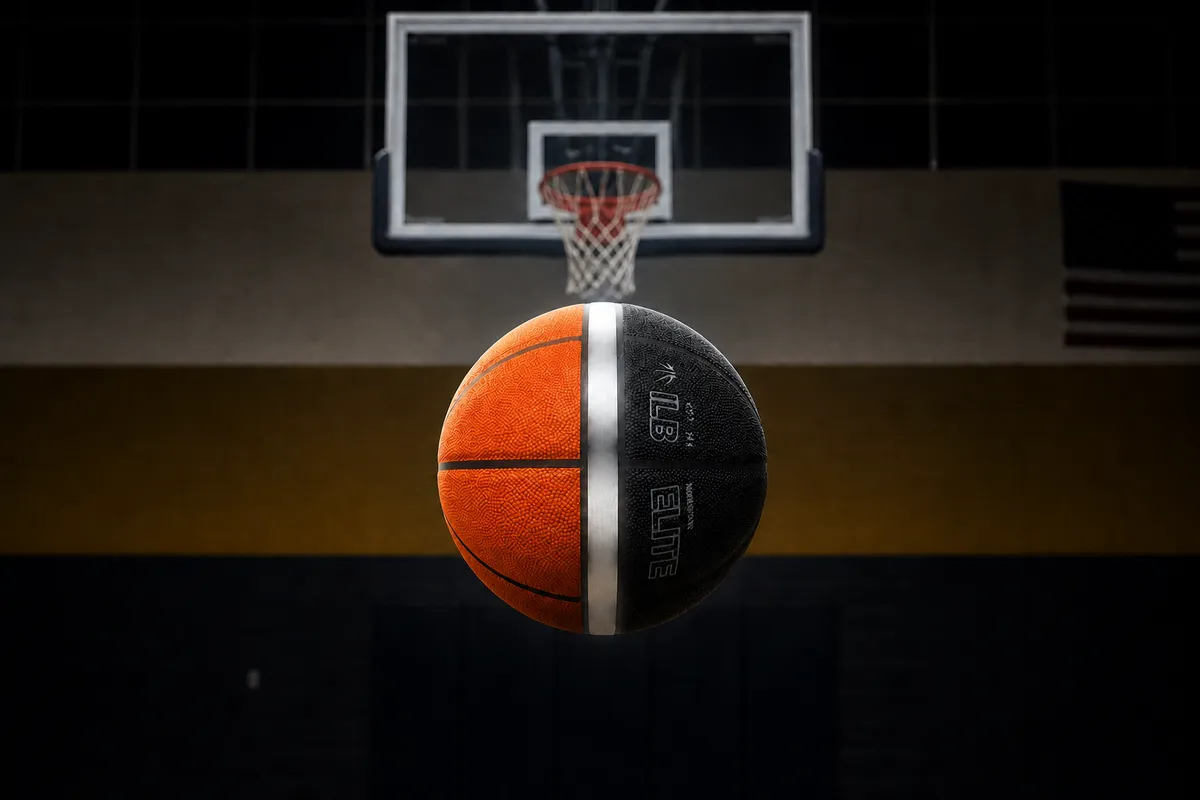
The ILB Rotation Basketball has white markers that blur into a visible line as the ball spins backward. Watch that line in the air and you can see exactly how steadily your shot is rotating. A clean line means pure backspin. A tilt or wobble tells you the rotation isn't staying straight. Every rep tells you the truth, right there in the moment.
No Bluetooth. No charging cable. No app. Just physics and your eyes.
It's half orange and half black, with the white markers running right down the middle so they pop. You can check out the Rotation Trainer Basketball here.
Basketball backspin: can you actually see yours?
Every player's been told to put backspin on it. Probably a hundred times. I'm not going to rehash that.
My question's simpler. How do you know you did?
With a regular ball you're mostly guessing. The seams spin by fast and it's tough to tell what you're looking at, especially from where you're standing. That's the whole reason the markers are there. When the ball spins backward they stop looking like separate marks and turn into a line. And a line is easy to read. Your eyes don't have to work for it.
If arc is the bigger issue for you right now, I'd start with how to get arc on your jump shot and come back to this.
How to check shot rotation with the line
Nothing fancy here. It's really just three looks.
A clean line. That's pure backspin. It's the one you want to see again and again.
A tilt. The line leans. That means the rotation isn't staying straight.
A wobble. The line won't sit still. Same message, the rotation isn't staying straight.
Watch it in the air. Every rep, not just the ones that go in. A make with a tilted line still tells you something, and so does a miss with a clean one.
If you've got a rebounder, a parent, or a coach with you, they can see the line too. That's honestly one of my favorite parts. Everybody in the gym is looking at the same thing.
One thing I want to be straight about. The ball doesn't tell you what's wrong with your elbow or your wrist. It's not diagnosing your mechanics and it doesn't replace a coach. What it does is tell you the truth about the rotation, right then, so the next rep has something to aim at.
Smart basketball vs. a visual feedback ball
I don't think one has to lose for the other to win.
A sensor ball is great at collecting data. Lots of it, stored, something you can study later. That's exactly why it makes sense for what the NBA's looking at. Officiating research needs data, not a player's eyes.
A shooter in the middle of a workout needs something else. They need to know about the shot they just took, before they take the next one. That's where I landed after those Wilson years. Put the answer where the player is already looking.
I love that the NBA is exploring this. The league treating the ball as a source of information tells me we were asking the right question all those years ago. We just answered it differently.
They put a computer in the ball. We put the answer on the ball.
Sometimes the smartest basketball is the simplest one.
Not sure if rotation is even your biggest shooting problem? Find your training strategy with the free training quiz. It'll point you where to start.
FAQ: backspin, the Rotation Basketball, and the NBA ball
Is the NBA really testing a smart basketball?
Yes. The league announced on October 5, 2026 that select preseason games will use Wilson-developed connected basketballs with a Bluetooth sensor inside. Per the AP, the data is for research only and won't affect calls in those games. The longer-term goal is real-time officiating help.
How do I check my shot rotation without an app?
Shoot the ILB Rotation Basketball and watch the white line in the air.
Clean line: pure backspin.
Tilt or wobble: the rotation isn't staying straight.
That's the whole read. Then take the next one.
What does good backspin look like on the Rotation Basketball?
You're looking for one clean line. When the ball spins backward, those white markers stop looking like separate marks and smear together. Steady rotation, steady line.
Does it have a sensor, or do I have to charge it?
Nope. Nothing to charge, nothing to pair, nothing to download. It's a basketball with white markers on it. The feedback comes from physics and your eyes.
What size is it?
It's a men's size 7. The product page has it at 29.5 inches around.
Will it fix my shot?
Honestly, no ball fixes a shot. You do. What this one does is show you the truth about your rotation on every rep, instantly. It won't diagnose your mechanics, so if something keeps showing up, take it to your coach.
Is a smart basketball better than a visual feedback ball?
Depends on the job. If you want stored data to study later, a sensor ball does that. If you want to know about your rotation while the shot's still in the air, I built this one for exactly that. For shooting reps, I'll take instant every time. The rep is the teacher.
Find your training strategy
Rotation's one piece of the shot. If you don't know which piece to work on first, take the free training quiz and find your training strategy.