Basketball Crossover Drills: Build a Shifty Cross From Level Zero
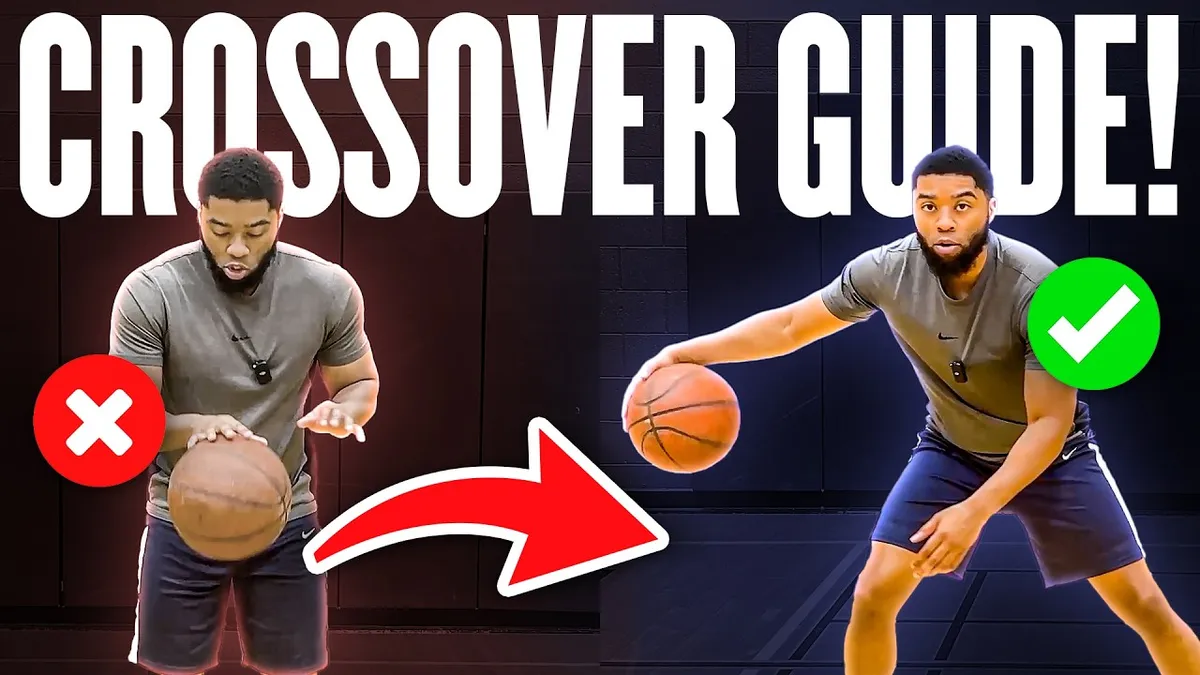
Most beginners think they're crossing the ball over when they're really just switching hands. Narrow stance. Hand on top. Smack. Ball barely moves.
Coach Meech takes the crossover from that level-zero mess all the way to something that can actually shift a defender. Wide base first. Hand on the side. Snap and catch. Then continuous reps, a hang dribble, steps while you cross, and finally the Iverson cross and the cross jab.
Same cues the whole climb: stay low, keep your feet wide, snap the ball through below your knees, and let your hands meet in the middle.
Got a handle and need finishes off it? Our dribble moves to beat a defender post covers more of that. This one stays on building the crossover itself.
Not sure ball handling is what you should train first? Find your training strategy with our free training quiz.
Start with stance and hand position
Two mistakes Coach Meech sees over and over.
First is the narrow base. Feels fine when you're standing straight up. Then you grab the ball, drop a little, and start crossing from that skinny stance. He wants you in something closer to a defensive stance instead. Nice and low. Feet outside your hips and outside your shoulders.
That width is how you get by people. Picture a defender in front of you in their own wide base. Your inside leg has to swing through. Narrow feet make that almost impossible. They also wreck your ability to rock side to side. Feet too close and you just fall onto your heels when you try to shift.
Second mistake: hand on top of the ball, smacking at it. The ball sits in one spot while your hands trade places. That isn't a crossover. The ball has to travel from one side of your body to the other so you can actually get past somebody.
Put your hand on the side. Snap it. Push it through. Follow all the way. A lot of beginners stop short and just flick with the wrist. Meet hands in the middle, catch it on the far side, then go back. Now the ball is moving.
Snap and catch before you go continuous
Beginner drill. Get low. Feet outside your shoulders.
Cross the ball over, snap it as hard as you can, and catch it. Don't send it right back yet. One direction. You're training the snap and the catch, nothing else. Stay low and try to snap it underneath your knees. Not up around your waist.
Why catch first? When you dribble, two things matter most: where you place the ball and how you catch it. Coach Meech compares it to juggling. Pass an object to the wrong spot and the whole chain falls apart. Same thing with your handle. You're trying to move and make decisions, but the ball is in the wrong place, so the flow dies. Can't catch it and you run right past it. Turnover.
Pay attention on the catch. Crossing left to right, you should feel the ball rotate in that hand. That spin is how you know you're actually catching it, not just smacking whatever shows up. You'll need that feel once you start moving.
Cold hands before a longer session? Our basketball dribbling warm up is built for that.
Continuous snaps
Catch feels clean? Now go back and forth.
Same low, wide stance. Snap through. Hands meet. Catch. Snap back. Keep it under the knees.
Three to four continuous reps, then reset. Four to five sets. Both sides. Don't rush so hard you lose the feel of the ball between reps. Get your hands right, then go again.
Hang dribble for shiftiness
Still stationary, but now you're adding the hang that makes the shifty stuff possible later.
Wide base. Pound a regular dribble hard. Let the ball float for about a second or two, then cross it over. Keep your hand on top or a little on the side. Not underneath.
If you dribble soft, the ball won't stick in your hand. Pound it so it comes back with power, hangs, then you snap it through. Dribble, hang, cross. Flip sides. Same pattern: three to four in a row, four to five sets.
That hang is what buys you time for footwork. Without it, every shift feels like you're late.
Add steps (without wrecking the snap)
Once the stationary work feels solid, start walking it up the floor.
Everything from before stays. Low. Wide. Ball in your left: when you cross, the ball hits the floor first, then your right leg steps. Repeat as you move.
Keep that wide base. People sneak narrower as they walk without noticing. And don't step too soon. Step early and your hand crowds your leg, which is how the ball clips your leg. Floor first. Step second. Snap through every time.
Start on the baseline and work to the free throw line. Got space and feel good? Take it to half court or full court. Chase as many clean reps in a row as you can. Mess up mid-floor and keep going. You don't have to restart every miss.
Then fold in a dribble step.
You're never crossing every single dribble up the floor as a point guard. You push in one hand, then cross when you need it.
Ball in the right: dribble step with your left while you pound right. Motion step with the right. Cross as you step with the left. The rhythm up the floor is dribble step, motion step, crossover. Hang the ball on that motion step so you've got time for the extra step when you go by someone.
Same distance work. Baseline toward the free throw, or longer if the floor allows. Both hands. Up and back a few times.
If the plant under your jumper is its own problem, basketball footwork drills is a separate lane.
Iverson cross and cross jab
Basics are covered. Two crosses Coach Meech says elite guards should have.
Allen Iverson crossover.
Stay low and wide. Setup punch dribble, let it hang. Dig step with the opposite leg. Ball in the left means you dig with the right, and that dig pushes you left. Shift your shoulders and your weight that way. Just lifting the foot and crossing doesn't move anybody. The dig has to sell the drive so the defender goes with you.
Step outside their frame. Snap the cross low with hands meeting in the middle. Wide or high crosses give the defender a steal. Keep it low, then explode past and take a couple dribbles downhill.
Do 10 to 20 reps for two to three sets on each hand. Actually get by the defender. Don't stay planted and pretend.
Cross jab.
Low and wide again. Take a small step with the same-side leg you're crossing toward. Ball in the left, crossing right: small step with the right so the ball doesn't run into a big plant. Cross. Jab with the left and shift your weight that way with your shoulders. Motion step with the right. Put the ball down on time and go.
A lot of beginners jab without shifting anything. The hang (or pocket dribble) is what gives you time to send the defender one way before you leave the other. Same volume: 10 to 20 reps, two to three sets, both ways, exploding downhill.
Coach Meech points at Ja Morant living on that cross jab off the pick and roll. Shift the big, then go.
Weak hand still soft on these? Add weak hand basketball drills. Guards who want a full create-off-the-bounce session can also use the small guard basketball workout.
FAQ
What basketball crossover drills does this video teach?
Snap and catch, continuous snaps, hang dribble, moving cross with floor-then-step timing, dribble-step into the cross, then the Iverson cross and the cross jab. Build them in that order.
Why does a narrow stance kill the crossover?
You can't swing the inside leg past a wide defender, and you can't shift weight side to side without falling onto your heels. Wide base comes first.
Hand on top or on the side?
Side. Top-hand smacks just switch hands. Side of the ball lets you snap it through so the ball actually changes sides.
How low should the cross stay?
Under the knees. High or wide crosses travel too far and give the defender a window at the ball.
What is a hang dribble?
Hard pound, ball floats a second or two with your hand on top or the side, then you cross. That float is the time you use to shift feet and shoulders.
When do I start moving?
After the stationary snap and hang feel clean. Ball hits the floor first, then the step. Keep the wide base as you walk up the floor.
How many reps on the Iverson cross and cross jab?
10 to 20 reps, two to three sets each way. Coach Meech wants you exploding past the defender each time, not staying still.
Find your training strategy
A shifty crossover is one piece of the handle. Don't know what to train next? Take the free training quiz. Find your training strategy.