Weak Hand Basketball Drills: 10 Drills to Fix Weak Handles
Weak Hand Basketball Drills: 10 At-Home Drills to Fix Weak Handles
Lose the ball the second a defender gets in your face? Can't catch it coming back through your legs? Handle falls apart when you get low? Good news. Every bit of that can be fixed in your living room, driveway, or bedroom, with a ball and nobody else.
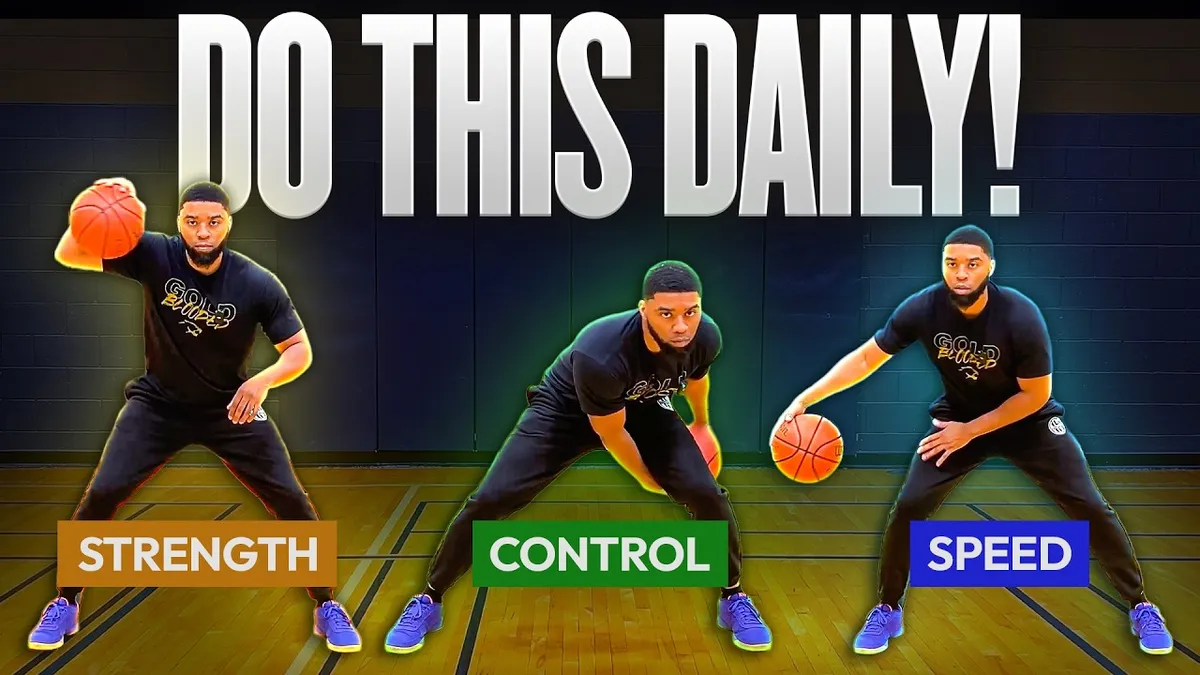
Coach Meech from I Love Basketball TV runs through 10 beginner friendly dribbling drills you can do at home by yourself. Watch him, then work through the notes below with a ball in your hand.
Two things run through the whole video. Get nice and low, feet wide. And work on catching the basketball, because that's where beginners fall apart. No rep counts or timers in the video, so I'm not going to make any up. Go until the reps are clean.
1. Figure eight, no bounces
Feet outside your shoulders. Drop those hips, bend those knees. Now pass the ball between your legs and around each leg. Hand to hand. The ball never touches the floor.
Maybe you can go between the legs once, but then you have to lift a leg to get the ball through. Or your hips pop up. This drill fixes that, because your feet stay planted and your hips stay down. And you have to catch it, then send it back to the other hand. Catching is the thing beginners struggle with most on between the legs dribbles. They put the ball in the right spot but can't catch it and transfer it.
So spread your fingers. Big hand. Stick to the ball.
2. Behind the back catches
Same low stance. One dribble behind the back, catch it, bring it to two hands back at center. Switch hands. The whole point is the catch.
Most beginners reach too far. You go behind the back, your hand is way out to the side, and the ball just falls. Keep your hand right by your leg. Less distance for the ball to travel, and it drops right into your hand.
One more small tip on the dribble itself. Don't start in front and flick your wrist at it. Same problem, the ball's too far away. Push it through until your dribbling hand could hit your thigh. You don't have to hit it. Just be close enough that you could.
3. Crossovers with a thigh tap
Feet wide, outside your hips. Cross the ball over in front, and tap the opposite thigh with the hand you just crossed with. Ball in your left hand? Cross it, then tap your right thigh with that left hand. Now it's in your right hand. Cross, tap your left thigh. Back and forth.
Why bother? When people first learn the crossover they just switch hands, like that. With the tap, your hands have a second job, so you're forced to speed up. You're also swinging the ball through instead of sliding it across in front of you.
4. High pounds
The ball bounces above your shoulder, up near the top of your head. You want to control it and push it through the floor.
Watch for padding. A lot of beginners just smack at the ball. Not here. Hand stays on top. Never let it drift underneath, then come back over and pound again. Use your whole arm and drive it down.
5. Side to side over an object
All you need is a chair, a cone, some shoes. Anything that isn't too high. Set it right in front of your face, dead center. Bounce the ball on one side, then the other, with the same hand. Don't swing it into the object. Bounce it over the top. That's ball control.
Here's what Coach Meech wants you to get. You can't move a ball you don't have your hand on. So pound it hard enough that it sticks into your hand on the way back up. Then move it over, fast. Dribble too soft and it comes back weak, and you've got nothing to move. Plenty of people can go one way. Coming back over the top is where they struggle, so make sure you do both.
6. Figure eights with footwork
Back to the figure eight, but now your feet get involved. Going between the legs, take a small step with the leg on the side the ball is heading to. Left hand to right? Small step with the right leg. Put it back, then step with the other leg and go the other way.
Partial step. Not a full one. A full step is that long stride, like you're running into a defender. Keep your feet wide and just step forward a little.
Footwork matters a ton in dribbling, but the bounce messes it up. You get so worried about the ball you forget your feet. Or you obsess over your feet and forget how to dribble. This drill lines the two up.
7. Figure eights going backwards
Same idea, but now you step back as you go through. Ball starts in your left hand, heading right? Step back with the left leg. Catch it. Step back with the right, go through again. Your base can run a little longer since you're stepping back, but not so long that you lose your balance.
Why do it? Everybody wants to attack the rim. Sometimes, though, a defender is up on you and you need to ease the pressure. Go between the legs, back out, then go forward. Only practice driving forward and escaping pressure gets hard.
Move your feet first, then go between the legs. Go too soon and you trip yourself up.
8. High, medium, low while walking
Start with the ball high, up by your shoulder or above your head. Bring it down to hip level. Then get super low and tap it. That last one is all fingertips. You're walking forward the whole time.
A lot of beginners only know one height. Drop lower and the handle's gone. But sometimes you need to dribble upright too, like when you're waiting on a play. Learn all three.
9. Skip to the side
Say you want to go right. Ball goes in your right hand, the one in front. When you dribble, the ball turns over, and you just skip to the side. Same thing going left.
Picture the game. You're low, a defender's in front of you, you take one lift to the side. That's your hesitation.
Don't pound it straight down. Hand on the side of the ball, let it turn over, push it out as you skip.
10. Crossover with the speed stop
Last one, and it adds an important piece of footwork. Ball in your left hand, cross to the right, and swing your left leg through. Step with your outside leg. The moment that foot lands, cross again. Then the right leg swings through and the left foot lands.
Think of it like running with the ball. Cross, take off, land, cross. You're working a zigzag in whatever space you've got at home. Get that defender to slide, then cross back the other way.
One detail to catch. When the leg swings through, don't step straight in front of you. Picture a defender standing there. You'd run right into them. Swing the foot around to the outside of their hip. You want to get by, not into. Feet and handle, working together.
Where to start
All ten in one night? Nah. Meech never lays out a schedule, so go with whatever's biting you hardest. Dropping it between your legs, live in 1 and 2. Soft pounds, that's 4 and 5. If your feet and your handle keep tripping each other, 6, 7 and 10 are your drills. Clean reps. Fast and sloppy gets you nowhere.
Handle feeling steadier? Take it to a defender with four dribble moves to beat a defender, or try some ankle-breaking basketball moves. And if you'd like a whole plan instead of one video, Hybrid Handles is the program path on ILB Elite.
Not sure handles are even your biggest need right now? The free training quiz sorts that out. Find your training strategy in a couple of minutes.
Frequently Asked Questions
What are the best weak hand basketball drills to do at home?
Meech gives you ten: figure eight with no bounces, behind the back catches, crossover with a thigh tap, high pounds, side to side bounces over an object, figure eight with footwork, figure eight going backwards, high medium low pounds while walking, the skip to the side, and a crossover with the speed stop.
Do I need a partner or a gym?
No. He built these for home, solo. A ball does most of it. For the side to side drill, find a chair, a cone, or a pair of shoes.
Why do I keep dropping the ball going between my legs?
Odds are it's the catch. Beginners usually put the ball in the right spot, then can't catch it and get it to the other hand. Try the figure eight with no bounces. Stay low, make a big hand, stick to the ball.
What's the biggest mistake on behind the back catches?
Reaching way out to the side. Your hand belongs right by your leg, so the ball has a short trip down. Also push the ball through until your dribbling hand could touch your thigh.
What does a good high pound look like?
Ball up near the top of your head. Hand on top the whole time, whole arm driving it through the floor. No padding at it, and no sliding your hand underneath between pounds.
Why does the ball have to come back hard in the object drill?
Soft dribbles come back weak. They won't stick in your hand, and you can't move a ball you aren't holding onto. Pound it, let it stick, then move it over quick.
Why do figure eights going backwards?
Sometimes a defender is pressuring you and you've got to ease off before going forward. It also gets your feet and handle working together, so you aren't tripping over either one.
How do I do the speed stop drill right?
Swing that leg through to the outside of an imaginary defender's hip, never into them. Then land, cross again, and keep zigzagging in whatever space you've got.
Find your training strategy
Ten drills is plenty. To figure out what to train next, take the free training quiz and find your training strategy.
Get low. Get your hand on the ball. Catch it every rep. That's what Coach Meech keeps coming back to.